Financial Literacy for Economic Independence
Financial literacy is a powerful tool for building economic independence and long-term financial security, especially for persons with disabilities (PwDs) who often face barriers to employment and financial services. By understanding how to budget, save, borrow responsibly, and use financial services, individuals gain the confidence to make informed financial decisions and improve their economic stability.
In many rural and underserved communities, lack of awareness and limited access to financial systems prevent vulnerable groups from fully benefiting from banking services, government schemes, and income-generation opportunities. Financial literacy initiatives help bridge this gap by providing practical knowledge and guidance to navigate the formal financial system and strengthen economic resilience.
Through this program, Voice of Needy Foundation (VNF) empowers persons with disabilities to build financial capability, develop saving habits, and access opportunities that lead to sustainable livelihoods.
Location: Aalur, Hesarghatta, Dasanpura, Kaachohalli, Usukur, Chikbanavara, Kadamgere, Hurlichickanhalli, Sondakuppam, Kitanahalli
Year of Inception: 2025
Program Objectives
The Financial Literacy Program is designed to strengthen the financial capacity and independence of persons with disabilities through a structured and participatory approach.
1. Baseline Assessment
The program begins with baseline surveys to understand the current financial awareness, income levels, and financial challenges faced by persons with disabilities. This helps design targeted interventions that address real needs.
2. Financial Education & Training
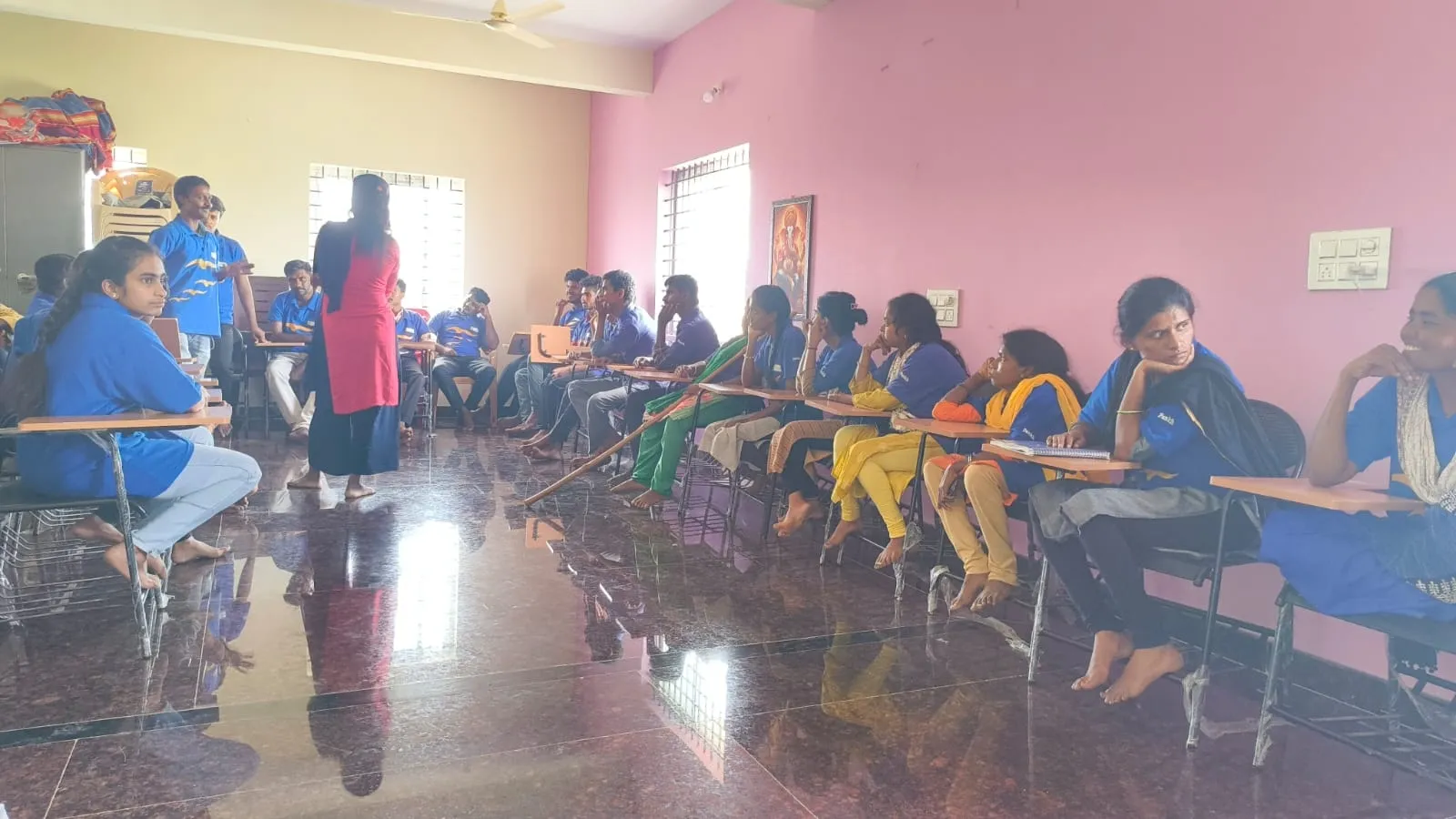
Participants receive structured training sessions covering key financial concepts such as:
- Budgeting and household financial planning
- Savings and responsible borrowing
- Understanding banking services and digital payments
- Financial safety and avoiding debt traps
These sessions equip participants with practical knowledge that can be applied in everyday financial decisions.
3. Promoting Savings & Responsible Financial Behaviour
The program encourages participants to develop regular saving habits and disciplined financial practices, helping them build financial stability and reduce dependence on informal moneylenders.
4. Formation of Self-Help Groups (SHGs)
Persons with disabilities are organized into Self-Help Groups, which create a supportive community platform for collective savings, internal lending, and peer learning.
Self-Help Groups typically consist of 10–25 members who meet regularly to save money and provide small loans to each other, enabling members to access credit and build financial confidence.
5. Linkages with Banks & Microcredit Institutions
VNF facilitates connections between SHGs and banks, microfinance institutions, and government financial inclusion programs, enabling members to access formal financial services and affordable credit.
6. Support for Income Generation Activities
Participants are guided and supported to start income-generating activities and micro-enterprises, helping them translate financial knowledge into real economic opportunities.
7. Monitoring Behaviour Change
To measure the effectiveness of the program, midline and endline surveys are conducted to assess improvements in financial awareness, savings behaviour, and income levels.
8. Documentation of Impact
The program documents success stories, case studies, and impact data to highlight how financial literacy contributes to improved livelihoods and financial independence.
Who We Support
The program focuses on empowering individuals who face financial exclusion and limited livelihood opportunities, including:
- 1,000 Persons with Disabilities (PwDs)
- Individuals from rural and urban communities across Karnataka
- Youth with disabilities seeking financial independence
- PwDs interested in starting income-generation or micro-enterprise activities
Our Vision
Through financial literacy and community-based support systems, Voice of Needy Foundation aims to help persons with disabilities move from financial vulnerability to financial empowerment.
Because financial knowledge is not just about money — it is about freedom, confidence, and the ability to shape one’s own future.
Reach and Impact
| S.no | Target | Reach |
|---|---|---|
| 1 | 1000 | 542 |